
Skip to searchSkip to main content
    Languages
    airgonomik.ca

    Real-time information thanks to a dew point sensor

    Continuous monitoring using a dew point meter provides valuable real-time information about your system’s performance. By continuously measuring the dew point, you gain a clear understanding of the humidity levels within your compressed air or gas systems. This allows you to manage humidity proactively, ensuring optimal conditions for your processes. With integrated data, you can track trends over time and make informed decisions to prevent issues such as corrosion, contamination, and efficiency losses. Real-time data can be seamlessly integrated into your existing management system, enabling automated responses to changing conditions and optimizing performance. Continuous monitoring also provides early warnings of potential issues, allowing you to address malfunctions before they affect production or damage equipment. By leveraging this detailed, real-time information, you can improve reliability, reduce maintenance costs, and optimize the overall efficiency of your operations.
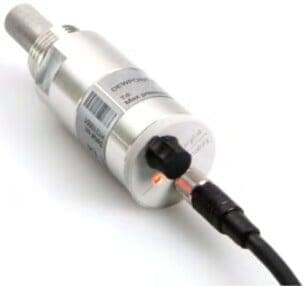

    A dew point meter is an instrument used to measure the temperature of the dew point of a gas, which indicates the amount of humidity present.

    The dew point is the temperature at which the water vapor begins to condense into liquid. A low dew point indicates that the air or gas is drier, while a high dew point indicates higher humidity.

    In industrial environments, dew point meters are indispensable tools to monitor gas quality and ensure the proper functioning of compressed air and gas systems.

    Measuring the dew point is essential, as moisture in compressed air or gases can lead to serious operational problems, such as:

    • Corrosion and rust in pipelines
    • Contamination of products and processes
    • Equipment failures and downtime
    • Freezing or obstructions in systems
    • Proliferation of microorganisms leading to safety problems

    By monitoring the dew point, manufacturers can:

    • Maintain consistent product quality
    • Ensure compliance with air quality standards
    • Optimize dryer performance and reduce energy consumption
    • Prevent costly damage and loss of efficiency

    Rash point meters are suitable for a wide range of compressed air and gas systems, including:

    • Compressed air systems
    • Nitrogen (N2)
    • Oxygen (O2)
    • Carbon dioxide (CO2)
    • Argon (Ar)
    • Other non-corrosive gases

    They are commonly used in production environments where gas quality and drought are essential to process performance.

    A dew point meter is usually installed directly on the compressed air or gas line, or via a sampling chamber.

    Here are some good practices:
    • Install it downstream of dryers to check air quality
    • Place sensors at critical points on the grid where temperature drops can lead to condensation, or upstream of critical processes
    • Ensure pressure and flow rate are adequate to ensure measurement accuracy

    Proper installation ensures reliable readings and makes it possible to quickly detect problems such as dryer malfunction or moisture accumulation.

    Modern dew point sensors support a range of industrial outputs and communication interfaces, enabling seamless integration into monitoring systems:

    • Analog outputs (e.g. 4-20 mA, voltage signals)
    • Digital communication (e.g. Modbus, RS485)
    • Alarm signals for threshold monitoring
    • Integration with data loggers and energy management systems

    These interfaces enable real-time monitoring, data analysis and system optimization.

    The measuring range depends on the application and technology used, but industrial dew point meters generally cover:

    • A dew point range between about -80°C to +20°C (-112°F to +68°F) for dry compressed air and gases
    • Higher ranges (e.g. up to +50°C / +122°F) for less critical applications or those using refrigerated dryers

    The VPInstruments dew point meter offers a wide measuring range of -70 to +60°C (-94 to +140°F), making it suitable for a wide range of industrial applications related to compressed air and technical gases.

    Choosing the right range is essential to ensure accurate measurement and reliable monitoring under the specific conditions of your process.

    Get the brochure